Magazine · OrgelIndex
OrgelIndex: people, instruments and their stories
A worldwide organ atlas, a digital learning organ and a personal dedication: Olivier Mueller introduces the project he created in honour of his father, Eric Müller.
By Olivier Mueller
Origin and main article: KlassikBasel
Original in German. Machine translation.
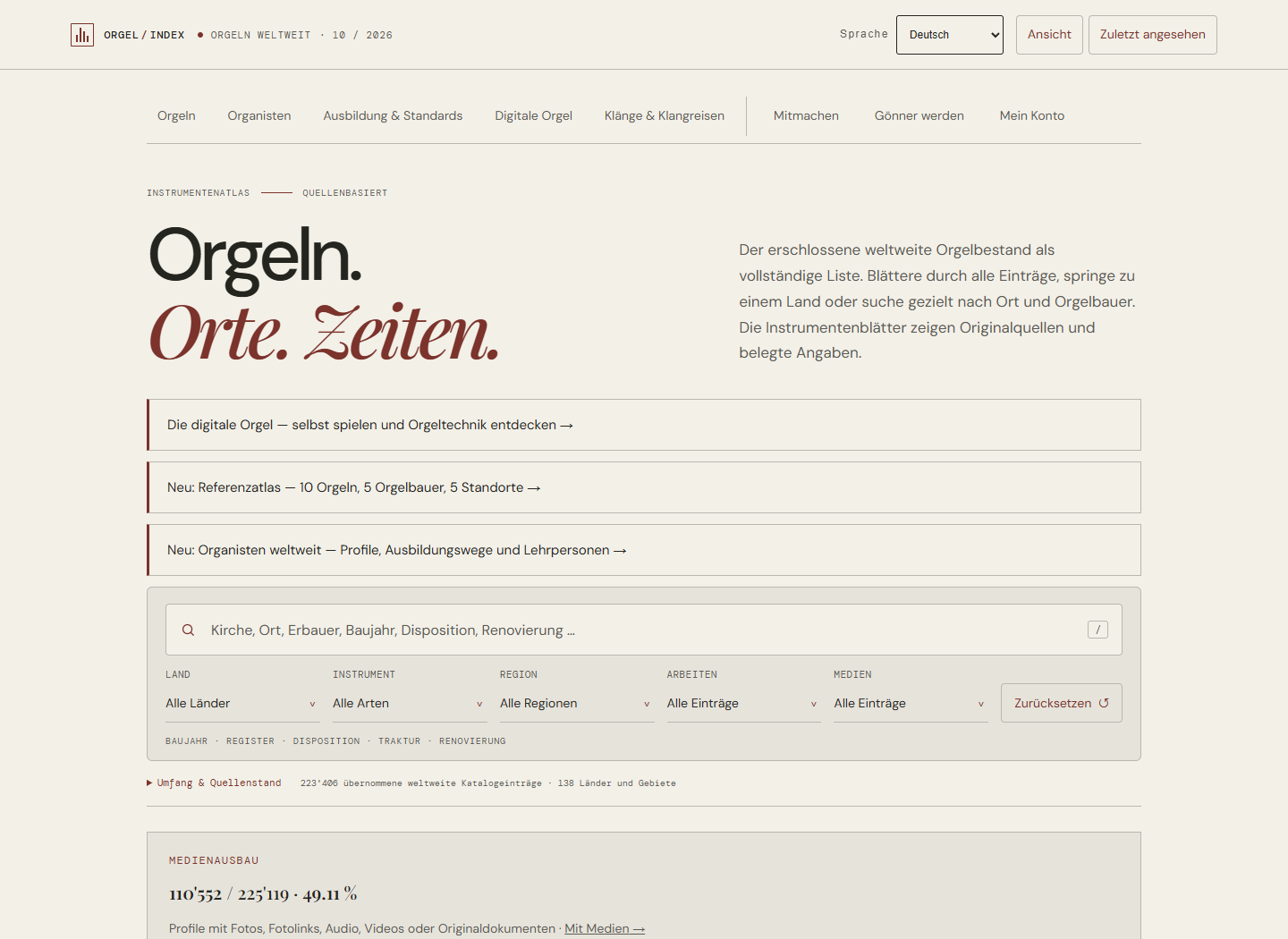
OrgelIndex / omu.studio · website view captured on 21 November 2026 ↗
For my father
I created OrgelIndex in honour of my father, Eric Müller. He is a cabinetmaker and organ builder. Wood, mechanisms and music meet in this craft: people build something that other people bring to life through sound. That connection is the personal starting point of the project.
His published portrait describes growing up in Schleitheim, in the canton of Schaffhausen, and his path from cabinetmaking to organ building. It draws on his family memories in «Was Louise trug». The family photograph and the portrait sketch based on it give this dedication a face. They show my father, rather than an anonymous figure from music history.

Müller family archive ↗
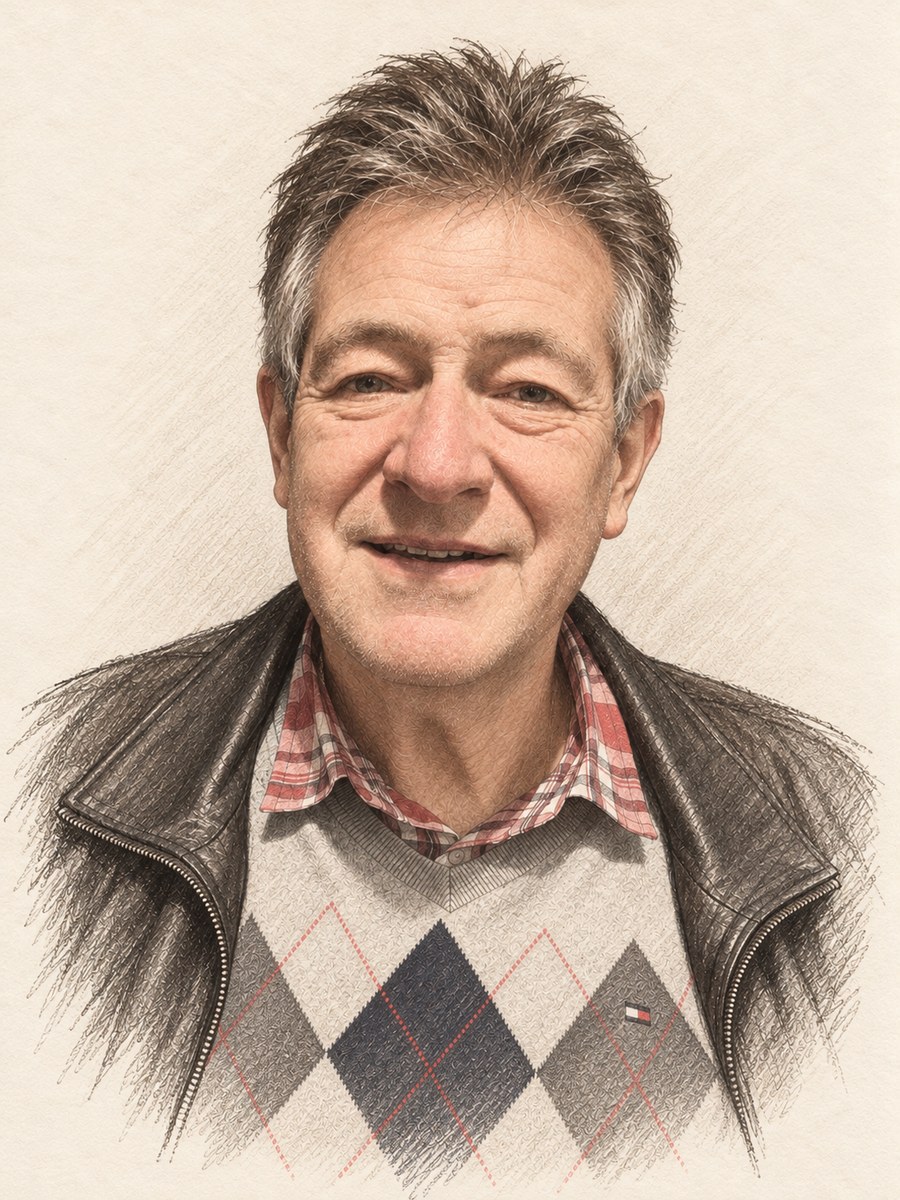
Portrait sketch from OrgelIndex, based on the family photograph ↗
People before the instrument
I am interested in the people who compose, play, build, care for instruments and pass on knowledge. An organist has connections to teachers, works, instruments and places. A workshop leaves traces in an instrument’s history. These relationships form a musical landscape that a concert date alone cannot describe.
This is also the thinking behind KlassikBasel: performances offer one way into music, alongside the people and their work. OrgelIndex takes that idea further. The organist directory and the section on education and standards offer other starting points. Personal profiles and documented relationships should matter as much as technical specifications.
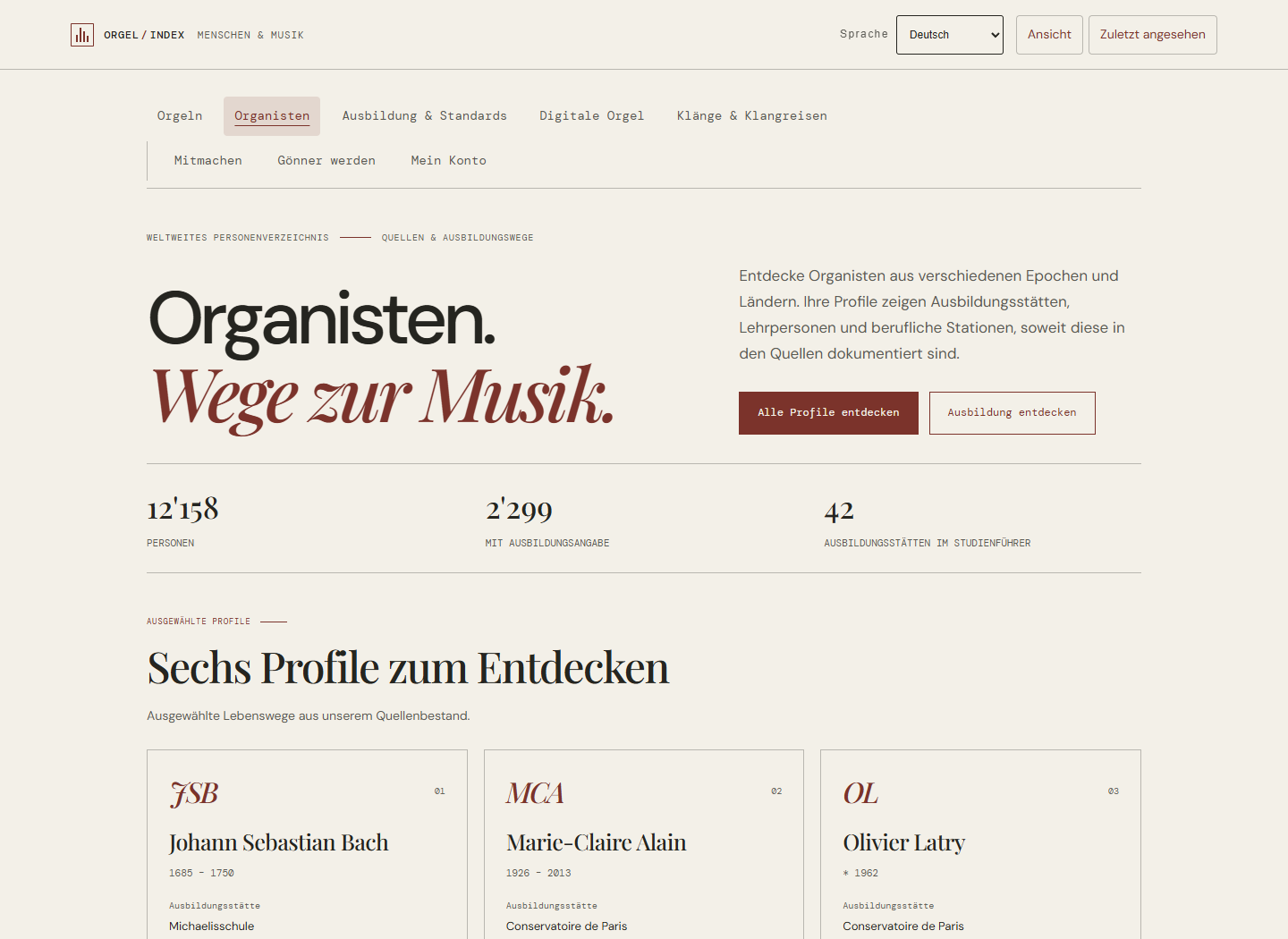
OrgelIndex / omu.studio · website view captured on 21 November 2026 ↗
A growing atlas with visible sources
The public source overview lists 225,119 catalogue and inventory records across 138 countries and territories. This is a count of entries. It may include historical instruments, different construction states and overlaps that still need to be resolved. It does not establish that there are 225,119 distinct, currently existing or individually verified organs.
For a large collection, provenance belongs with every claim. The index makes original sources and data dates accessible, and grows through verifiable regional stages. An unknown stop list, an uncertain identification or a missing image remains a research task. A documented state of knowledge is more interesting than an unexplained number.
Play and discover the technology
The website includes a digital learning organ with sections of two manuals, a pedalboard and eleven stops. It also explains actions, windchests and pipe construction. In the browser, visitors can explore the connection between a key, a mechanical movement and a sound.
The sounds are synthetic demonstrations. They do not claim to reproduce a particular historic organ faithfully. For me, this playful approach is an invitation: even without prior knowledge, visitors can ask questions, experiment and continue exploring real instruments and their sources.
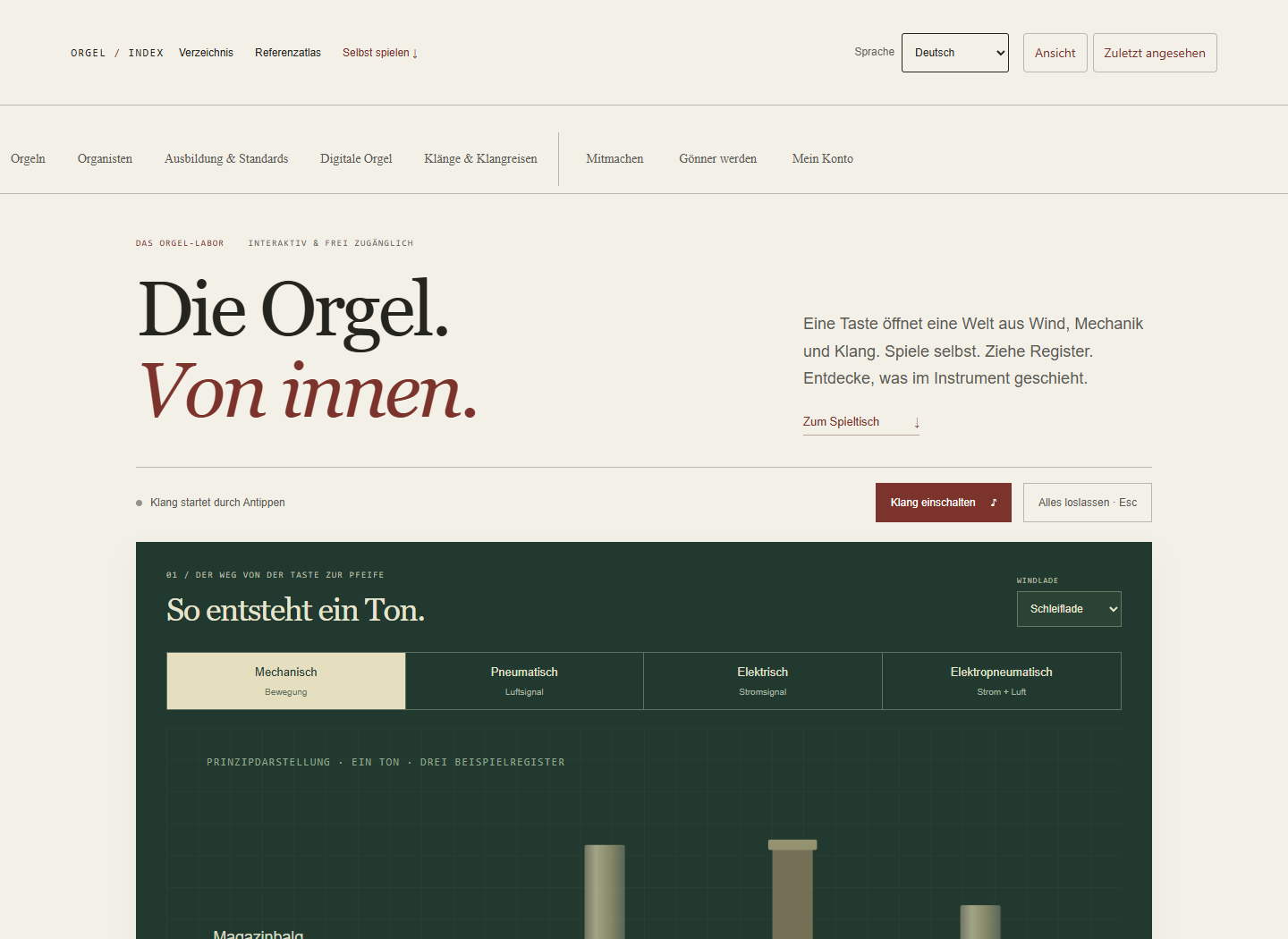
OrgelIndex / omu.studio · website view captured on 21 November 2026 ↗
Inside the project’s workshop
The reference atlas connects instrument, location and workshop profiles with drawings and documented construction principles. Photographs, sketches, technical illustrations and documented plans remain linked to their particular instrument and source. The profiles are gradually expanded, turning a catalogue entry into a way to discover a place, a craft and its history.
The preserved development images show how access evolved: a European directory with 130,467 entries on 9 October 2026, followed later that day by the worldwide version with 225,119. A mobile instrument view from that period is included too. These are real working versions of the project, shown alongside today’s homepage and wordmark.
The interface is available in ten languages: German, English, French, Italian, Spanish, Portuguese, Dutch, Polish, Japanese and Simplified Chinese. The image sequence shows current views captured on 21 November 2026, alongside the existing family photograph and portrait sketch. omu.studio is the independent studio responsible for concept and design. The personal dedication and this article are mine: Olivier Mueller.
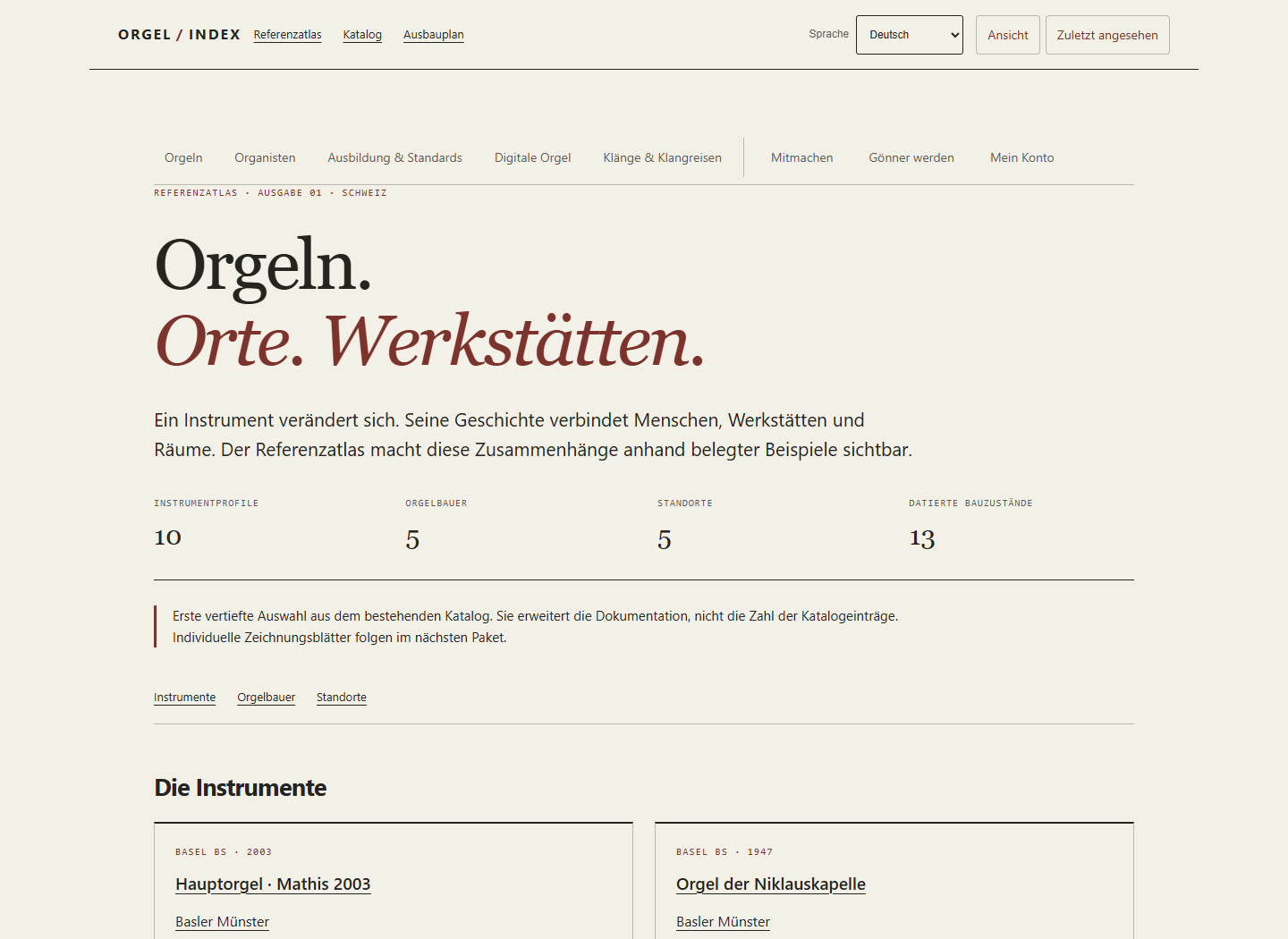
OrgelIndex / omu.studio · website view captured on 21 November 2026 ↗
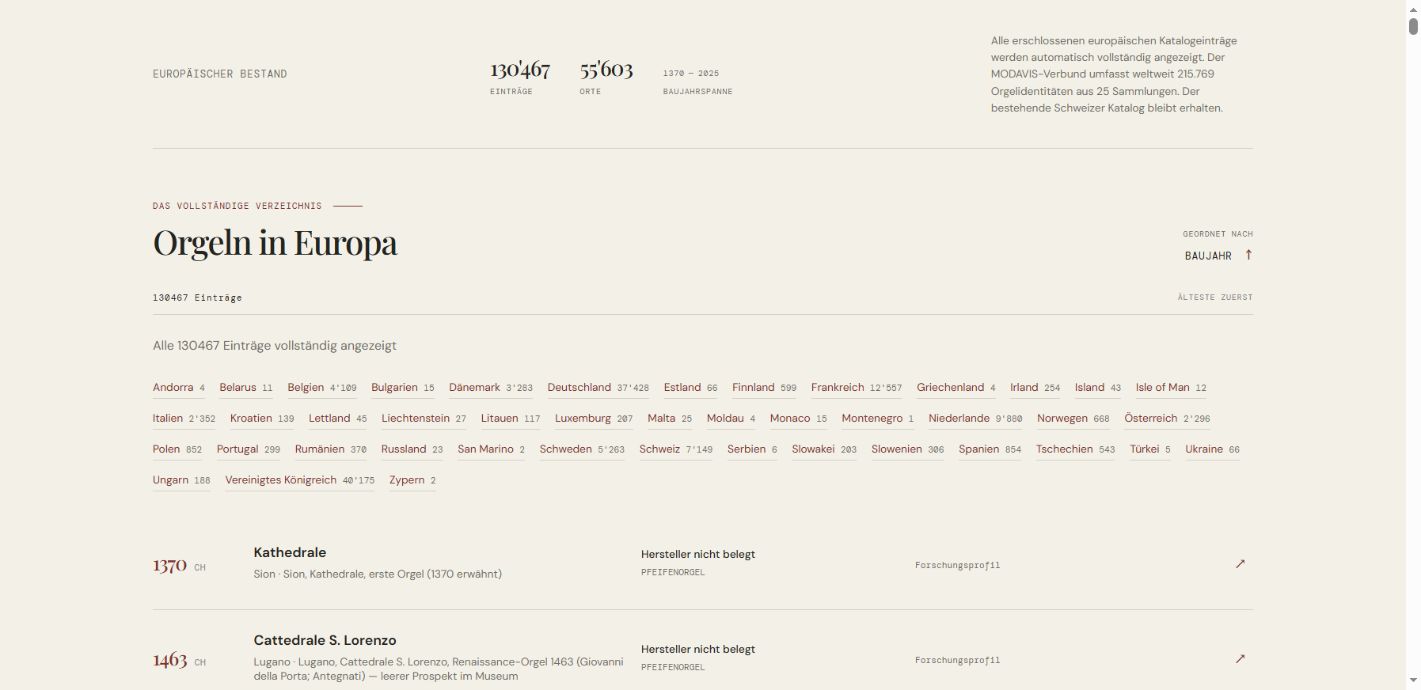
OrgelIndex / omu.studio · development archive, 9 October 2026 ↗
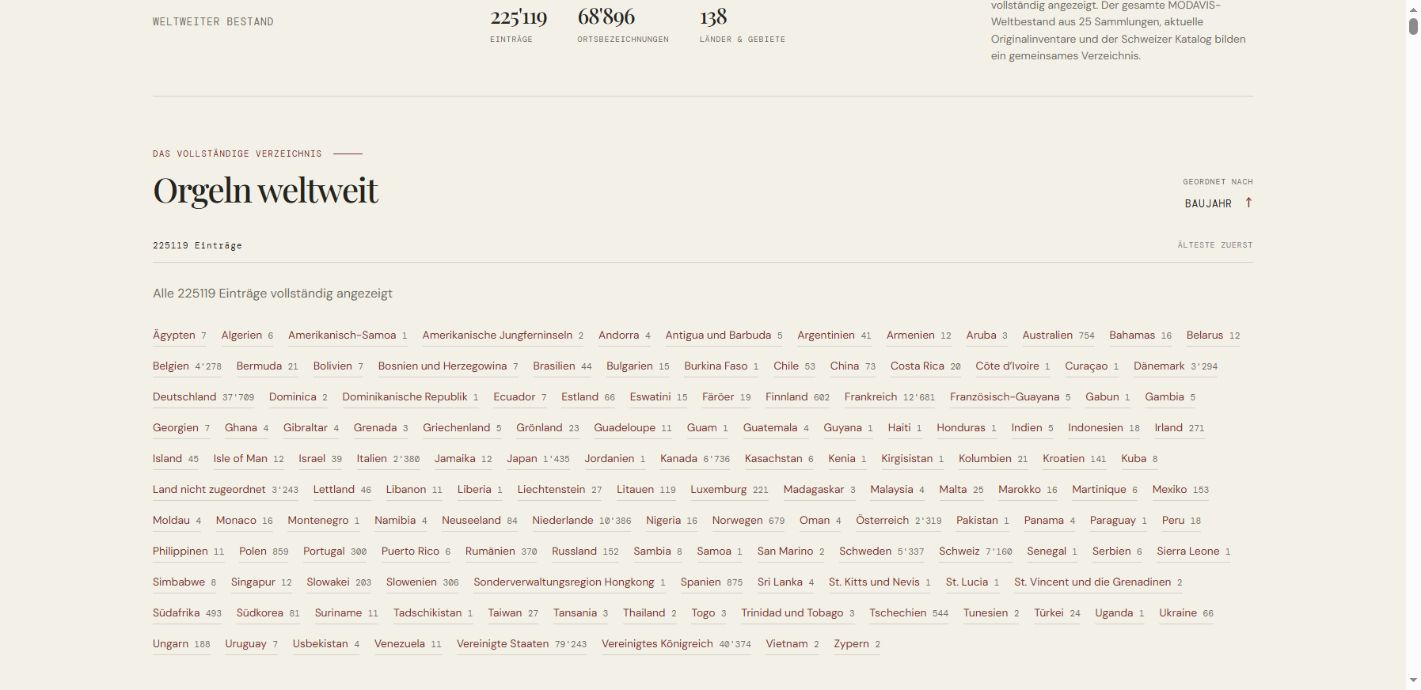
OrgelIndex / omu.studio · development archive, 9 October 2026 ↗
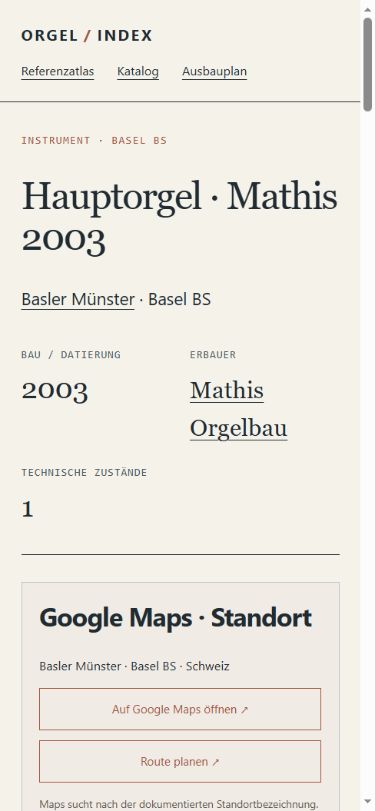
OrgelIndex / omu.studio · development archive, 9 October 2026 ↗
Sources and further reading
- OrgelIndex ↗
- Eric Müller ↗
- 225119 · 138 ↗
- OrgelIndex · People before the instrument ↗
- Play and discover the technology ↗
- Inside the project’s workshop ↗
Concept and design: independent studio: omu.studio